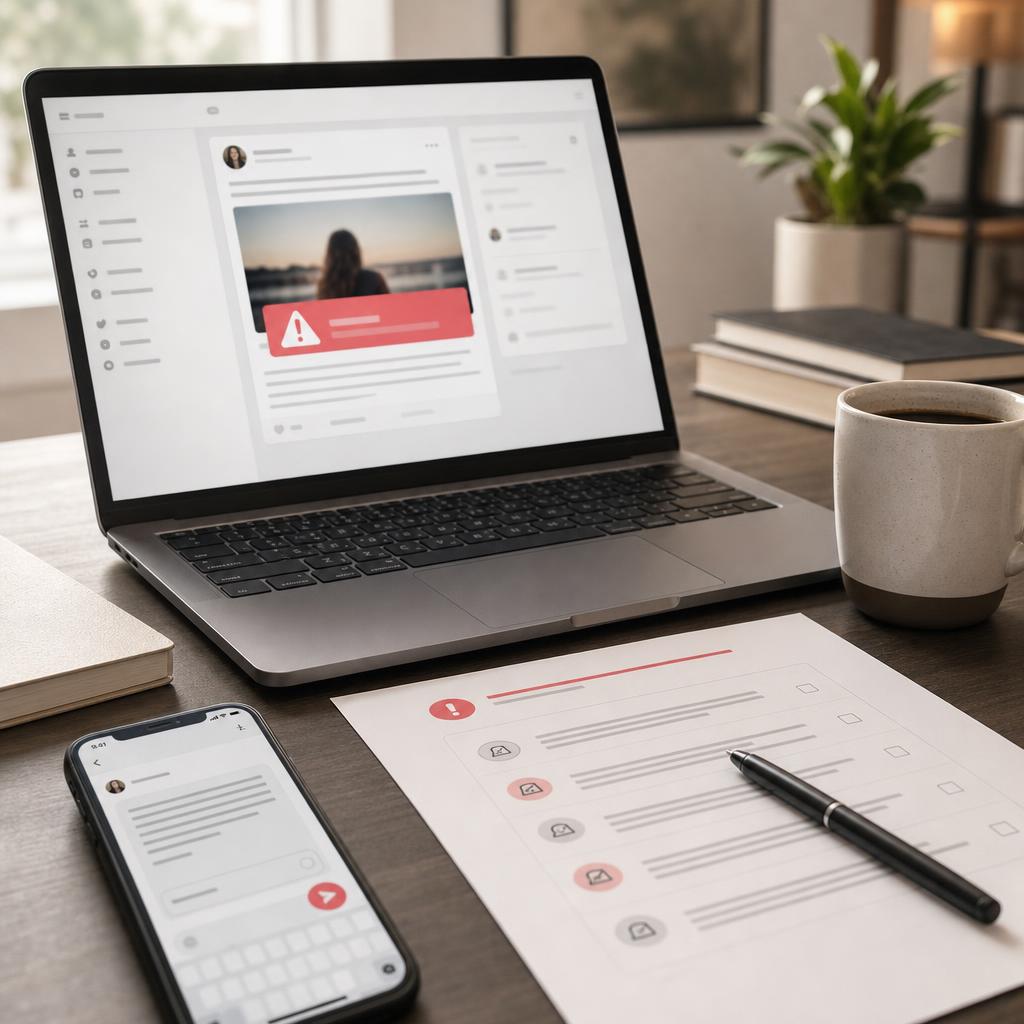
Read this before you need it
The hard calls are much easier to make before anyone is upset. Deciding them now means whoever handles the next incident is following a plan rather than improvising.
This covers the common shapes of trouble, from one creator saying the wrong thing to a letter arriving from a regulator. It's written for the person who runs the program, and it flags where to stop and bring in counsel. Your own agreements and legal team will shape some of these steps.
Two things to settle before anything else happens
One person can approve a takedown request without a meeting. Name them and name a backup, since every added approval is time the post stays live.
Write down what counts as bad enough to wake someone up. Everything else waits for the morning.
The first hour
Before you contact anybody, save the evidence and answer four questions. This takes ten minutes and it decides everything after it.
Screenshot the post, the caption, and the profile. Download the video. Note the date, the time, and the view count. Creators often delete posts once a brand reaches out, and you'll want to be able to describe exactly what was published.
Write out the specific words, with the timestamp if it is video. Not “they made a health claim.” The actual sentence.
Paid, gifted, commissioned, or affiliate makes it clearly yours. No relationship at all changes your options, not your interest.
A missing tag is one thing. “This cured my thyroid problem” is another. The ladder below has the rest.
Ten thousand views and climbing is a different situation from four hundred views three weeks ago.
Reply to comments on the post yet. Brands reply publicly to try to fix things and end up adding a second problem to the first. Handle it privately.
Ask the creator to edit a video that makes a disease claim. An edited video keeps the history, the comments, and sometimes a copy on someone's phone, so removal is usually the safer ask. Check with your counsel on where that line sits for your category.
Four levels
Put every incident in one of four levels. The level decides who you tell, how fast you move, and what you ask for.
When you're between two levels
When you're not sure between two levels, take the higher one. Treating an orange as a red costs you one slightly awkward conversation. Treating a red as an orange leaves it live for another month.
Red means stop what you are doing.
Not after the meeting. What makes a red a red is that the exposure grows while it's live.
While you wait on the creator
A few things are entirely in your control, so handle them the same day you set the level. On a red, pause any paid amplification behind the post, stop resharing it to brand channels, and pull it from any landing page or ad set it's feeding. This is a short pause on one asset, not a change to the campaign, and it keeps spend from compounding a claim you've already flagged. On an orange, it's usually enough to stop boosting while the rewrite is in progress. Yellow and green don't need this.
Talking to the creator
One message, sent privately, that names the exact problem and makes the fix easy. That is the whole job.
Most of these go fine. A creator who gets a clear, friendly note usually fixes it within a day, since they didn't know and don't want trouble either. The conversations that go badly are usually the ones where the ask was vague.
What a good message has
- The specific line, with the timestamp if it is video
- Why it is a problem, in one sentence, without a lecture
- Exactly what you want done
- A date
- An offer to help, like the approved wording they can use instead
Two mistakes to avoid
Being vague to be nice
“Hey, can you take another look at your recent post?” usually costs you two days and a round of clarifying messages. Quote the actual line instead.
Leading with the contract
Quoting clause 4.2 in the first message turns a five minute fix into a negotiation. The agreement is your backup, not your opener.
If you want a line changed, give them the replacement. “Instead of ‘helps prevent colds,’ say ‘supports immune health’” gets done today. “Please revise for compliance” does not.
Then record that you sent it: the date, what you asked, and what they said. This is the record that shows how quickly you moved from finding the issue to fixing it.
When they say no, or go quiet
Decide these steps now. In the moment, this usually involves someone who's performing well for you.
If they go quiet
Follow up once after two days, on a different channel. Email and direct message are not the same inbox.
If it's a red or orange and there's still no answer after a couple more days, and your agreement allows it, pause their commission or code. Tell them you're doing it, why, and that it's back on as soon as the post is handled. Framed that way, it usually gets a response without damaging the relationship.
Log every attempt with a date. A record of repeated outreach is far stronger than a single unanswered email.
If they refuse
Ask why first. Sometimes it is a real objection. They think you are wrong about the rule, or the post is their best performing content ever and they want a compromise. Sometimes you can take the compromise. A pinned comment with a proper disclosure is a reasonable answer to a yellow. It is not a reasonable answer to a disease claim.
If they still refuse on a red, you are done negotiating. End the relationship, turn off their links and codes, and record the whole exchange. You can also report the post to the platform, which is a slow route and not guaranteed, but it is the one you have when there is no contract to lean on.
Your biggest affiliate refuses, and pulling their codes visibly costs real money this month. This is exactly why the ladder gets written down in advance and signed off by someone senior, so the decision isn't being made under pressure.
A rule that bends for your top earner is hard to hold anyone else to.
The creator you never signed
You have no contract, no payment to pause, and no leverage. You still have three moves, and you should pick one in advance.
These posts are common and they surprise people. Someone got a code from a deal site, an old ambassador kept posting, a fan genuinely loves the product, or a competitor’s creator mentioned you in a comparison. None of them signed anything. All of them are talking about your brand.
A short, friendly note, no legal language at all. “Thank you for the love, we have to flag one thing for legal reasons, would you mind editing this line?” Most people say yes. They were being nice about your product. They are not trying to cause a problem.
For a serious health or money claim where the person will not engage, report the post to the platform. It is slow, it often goes nowhere, and it is still worth doing, partly because trying is part of your record.
If the post is good and the person clearly likes the product, offer them the actual program. Now they have a brief, rules, and a reason to follow them. This turns your biggest blind spot into part of the program you can see.
Send a legal threat as the opening move to someone who was praising your product. A friendly ask resolves most of these, and an aggressive one can easily end up as a screenshot.
Find them on purpose
The hard part isn't handling these. It's knowing they exist. Search your brand name, product names, and discount codes as part of the monthly review. Codes are the strongest signal, since one in circulation that you didn't issue points you straight to the source.
When it is not one post
If you find the same bad claim in three or more posts from different creators, stop working the posts and work the source.
This happens more than people expect, and the cause is usually upstream. Someone said it on a call, a line in the brief was ambiguous, or one popular creator used the phrasing and it performed well enough that others copied it. Working the posts one at a time won't get ahead of it while the source is still in circulation.
What to do instead
- Stop the source. Pull the line out of the brief, correct whoever is sending it, and if it came from your own website or ads, fix that too. Creators repeat what the brand says.
- Send one message to everyone, not twenty individual ones. “We got this wrong in the brief, here’s the correct wording, please update.” Owning the error gets a much faster response than twenty individual corrections.
- Then work the posts in severity order, worst first.
- Tell your manager and legal the same day. A pattern is the kind of thing leadership should hear from you rather than from somebody else later.
One incident with twenty posts attached, one cause, and one fix reads like a program working. Twenty separate flags describe the same week without the explanation.
When someone official gets in touch
The moment a letter arrives from a regulator, a competitor challenge lands, or a lawyer writes to you, this playbook stops and counsel takes over.
That isn't a formality. What happens in the first day shapes everything after it, and the natural instinct to respond quickly and helpfully is worth resisting until counsel weighs in.
✓ Send it to legal the day it arrives. Do not wait until you understand it.
✓ Stop deleting anything. No cleaning up posts, no tidying the folder, no removing old versions of the policy. Tell your team the same, in writing, today.
✓ Pull together what you have: the creator's agreement, the brief, their training record, your review notes, your monthly reports, the saved copies of the posts.
✓ Write down when you first learned about the issue and what you did next, while it's fresh. This gets asked, and reconstructing it later is difficult.
✗ Do not reply on your own, even to say something reasonable.
✗ Do not contact the creator about it before counsel says so.
✗ Do not post anything publicly.
✗ Do not promise a date or a number to anybody.
Competitor challenges deserve their own note
In a lot of categories the first serious challenge to your claims comes from a competitor, not a regulator, and it moves a lot faster than a government process. Treat one exactly like a regulator letter. Same day to legal, same hold on deleting things.
A program that was already running. Dated reviews, dated fixes, training records, and a written policy carry far more weight than anything assembled after the letter arrives. That's the real payoff of the monthly routine.
The debrief
After any red or orange, spend twenty minutes on four questions while it is still fresh. Not a meeting. Four questions and a paragraph.
Follow it back. Was it in the brief and ignored, missing from the brief, or said by somebody on our side?
The monthly review, a customer, a competitor, or luck. If it was luck, that's worth fixing alongside the post.
From posting to takedown. This is the number that matters most, and the one that gets better fastest once anyone is watching it.
One change. Not five. A brief edit, a training slide, a line in the claims list.
Write the paragraph and keep it
A short account of what happened and what you changed is worth more later than anything reconstructed from memory. It also builds a visible pattern of learning over time.
Then actually make the change
Debriefs are easy to hold and easy to leave there. Put the one change on someone’s list with a date, and check it next month. Otherwise the same issue tends to come back.
One page, plus what to send
The short version, if this is the only part you print.
Save the evidence before you do anything else. Screenshot, download, note the date and views.
Write out the exact words that are the problem.
Set the level: red, orange, yellow, green.
Tell whoever that level says to tell.
Message the creator privately with the specific line, the reason, the ask, and a date.
On a red, pause paid amplification behind the post and stop resharing it while you wait.
No answer in two days, follow up on a different channel. Still nothing on a red or orange, pause commissions or codes.
Log what you asked and when, and what happened.
Three or more creators with the same claim means fix the source, not the posts.
Anything from a regulator, a competitor challenge, or a lawyer goes to counsel the same day, and nothing gets deleted from that moment on.
Red or orange gets a twenty minute debrief and one change.
Three messages you can copy
General information, not legal advice. When something looks serious, stop reading pages like this one and call your lawyer.
This article is provided by PinkSpider for general informational and educational purposes only, and should not be considered legal advice. Advertising requirements and platform policies may vary by industry, jurisdiction, and circumstance and are subject to change. Readers should consult qualified legal counsel when evaluating compliance requirements for their specific business or marketing activities.